
What Happens If You Fail A Swallow Test For Dysphagia? Diagnosis, Risks And Recovery
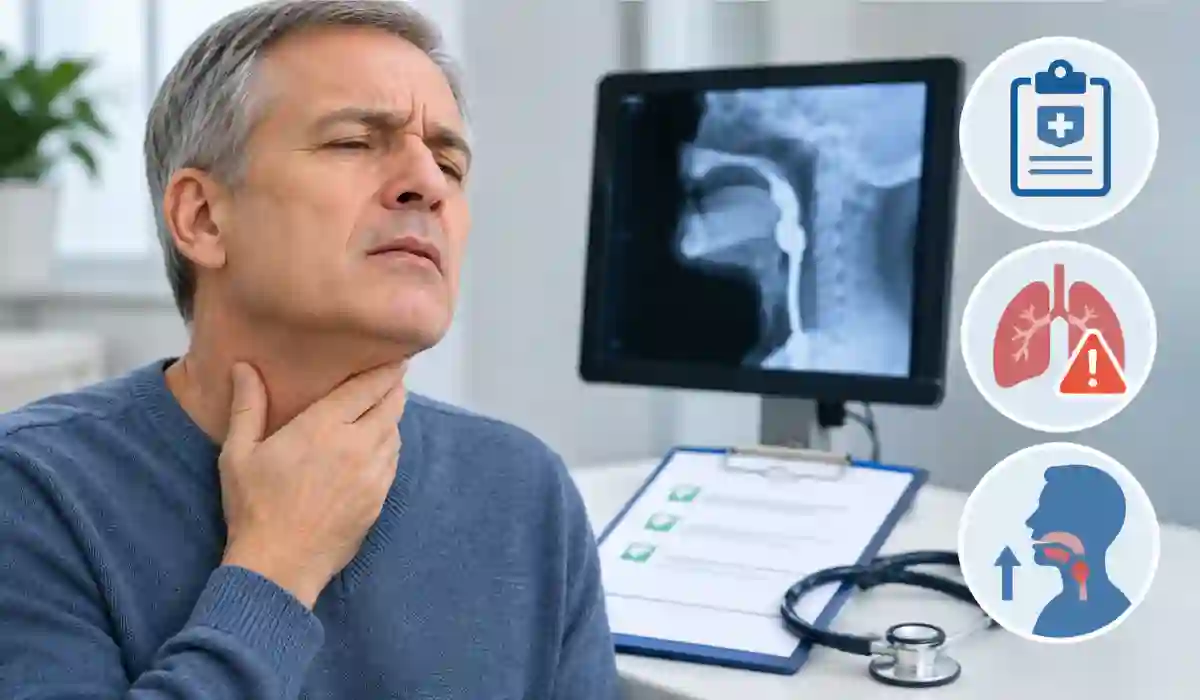
A failed swallow test for dysphagia means that you have a possible risk of food, liquid, or saliva going into the airway, causing aspiration pneumonia. Usually, the doctor will temporarily stop or restrict oral intake and arrange a more comprehensive swallow study to identify the underlying cause of your swallowing difficulties.
In this guide, you will learn about swallowing assessments and dysphagia, what happens if you fail a swallow test, common causes of dysphagia and swallowing difficulties, and treatment options after failing a swallow test.
Swallowing Assessments And Dysphagia
Dysphagia swallow studies diagnose different types of the neurological condition and may help screen for or identify its underlying causes, such as blockage or narrowing in the mouth, throat, or esophagus; impaired muscle or nerve control of swallowing; or inflammation that makes swallowing food and liquid uncomfortable. There are several types of dysphagia tests, including:
Bedside Swallow Screen
A quick, non-invasive test performed at the hospital to check whether someone may have dysphagia or is at risk of aspiration. Bedside swallow screening helps a doctor decide whether the person can safely eat or drink or needs further swallowing assessment.
- A nurse or speech-language pathologist asks about your swallowing symptoms, coughing, choking, or weight loss
- Checks alertness, voice quality, movement of the lip, tongue, and jaw, and neck muscles.
- They give small amounts of water and sometimes thicker liquids or soft foods to observe common dysphagia symptoms like coughing, throat clearing, a wet or gurgly voice, drooling, pocketing food, or breathing trouble.
Fiberoptic Endoscopic Evaluation of Swallowing (FEES)
FEES is a detailed test for dysphagia in which a thin, flexible camera scope is passed through the nose or mouth to directly view your throat and voice box while you swallow food and liquids. It identifies whether your swallowing is safe and efficient and whether there is any aspiration risk. FEES is mainly used to diagnose oropharyngeal dysphagia, issues in the mouth or throat phase of swallowing.
- A speech-language pathologist or an ENT specialist numbs your nose or throat and gently passes a flexible tube with a camera attached through a nostril to the larynx.
- You will be asked to speak, cough, and swallow small amounts of foods and liquids of different textures while the camera records your swallowing action in real time.
- The clinician looks for food or liquid entering your airway, material stuck above the vocal folds, leftover residue in the esophagus, weak throat clearance, and chin-tucking or thickened liquids to improve swallowing safety.
Upper Endoscopy
Upper endoscopy, also known as EGD, is a test used to diagnose esophageal dysphagia, where food feels stuck after swallowing. A gastroenterologist passes a thin, flexible camera tube through the mouth into the esophagus, stomach, and first part of the small intestine to look for the underlying cause. It looks for narrowing or scar tissue from reflux, injury, prior treatment, inflammation, ulcers, reflux damage, eosinophilic esophagitis, Barrett’s esophagus, tumors, foreign bodies, and signs of retained food or a dilated esophagus.
- A nurse checks your vital signs and places an IV line; your throat may be sprayed with a numbing medicine.
- You lie on your side and receive IV sedation that makes you feel relaxed or asleep, and a mouth guard is used to protect your teeth.
- The doctor gently inserts the endoscope through your mouth and esophagus into the stomach and duodenum, often inflating the area with air to see clearly
- The doctor may take biopsies, remove a foreign body or food bolus, or dilate a narrowed esophagus
Videofluroscopic Swallow Study (VFSS)
A VFSS, commonly called a modified barium swallow study (MBS), is a real-time X-ray video test that shows a clinician how food and liquid are moving through the mouth, throat, and upper esophagus. The test looks for aspiration risk, penetration, delayed swallow reflex, weak tongue or throat muscles, and whether safe swallowing is possible.
- You either sit or stand upright in front of a fluoroscopy machine
- An SLP or a radiologist gives you small amounts of barium mixed with liquids and foods of different textures and thicknesses.
- As you swallow, the machine records moving X-ray images so the medical team can observe the swallow phase by phase.
Common Causes Of Dysphagia And Swallowing Difficulties
Dysphagia has several underlying causes that are categorized into oropharyngeal (mouth/throat) and esophageal (food pipe) problems.
Neurological: These conditions affect the nerves and muscles that coordinate swallowing, often leading to persistent coughing, choking, or food or liquid entering the airway. Stroke, Parkinson’s disease, myasthenia gravis, Guillain-Barré syndrome, and other neuromuscular disorders are common causes.
Esophageal: These cause food to feel stuck in the food pipe, and swallowing can be slow or painful. Common causes include acid reflux, esophageal stricture, esophageal motility disorders, and esophageal cancer.
Mouth, Throat, and Treatment-Related: Head and neck cancers, dental problems, dry mouth, mouth ulcers, cleft lip and palate, injury to the mouth or throat, or medications like antipsychotics, sedatives, and those that dry the mouth or weaken muscles.
Treatment Options After Failing A Swallow Test
The goal of dysphagia treatment is to improve overall swallow function to ensure good nutrition and hydration, prevent airway blockage, and prevent food or liquids from entering the lungs. Treatment after a failed swallow test depends on the type of dysphagia that the person has and the underlying condition causing the swallowing difficulties.
Exercises: An SLP may train you in exercises to improve the strength and coordination of muscles for chewing, moving the tongue, and swallowing. You may also learn techniques to place food in your mouth or position your body and head to help you swallow easily.
Modified Diet for Dysphagia: Your doctor may recommend a diet that includes a variety of food and liquid textures that are easier to swallow. You may be asked to alternate between solid and liquid foods and to eat at a slower pace.
Esophageal Dilation: This medical procedure involves placing an endoscope into the esophagus and inflating an attached balloon to stretch the esophagus. Esophageal dilation is mainly used for dysphagia that narrows the esophagus. A long, flexible tube may be placed in a dilated esophagus to keep it open.
Medicines: Dysphagia caused by acid reflux is treated with prescription medicines to reduce stomach acidity. Corticosteroids may be prescribed to treat inflammation of the esophagus, while muscle relaxants are used to manage muscle spasms.
Conclusion: What Happens If You Fail a Swallow Test For Dysphagia
Failing a dysphagia swallow test indicates increased aspiration risk, which requires immediate medical intervention to restore safe food and liquid intake and nutrition. Dysphagia treatments are tailored to the underlying cause of the swallowing difficulty and typically include swallowing therapy exercises to strengthen swallowing muscles, a modified diet for dysphagia to safely swallow different food and liquid textures, medication for reflux or inflammation, or esophageal dilation to stretch narrowed passages.
If you or a loved one fails a dysphagia swallow test, consult a speech-language pathologist or gastroenterologist to draw up a safe feeding plan, implement tailored swallowing strategies, and protect your respiratory system and nutritional health in the long run.
FAQs
1. Does failing a swallow test mean aspiration risk?
Not always, but it means the bedside swallow screening for dysphagia found signs of aspiration risk, where food, liquid, or saliva may enter the airway. This warrants further swallowing assessments.
2. What assessment comes after a failed swallow test?
You may be referred for a clinical swallow evaluation by a speech pathologist, and an instrumental test such as VFSS or FEES to see exactly how food and liquid move from your mouth through the throat and esophagus into the stomach.
3. Can I still eat and drink after a failed swallowing test?
You need to be mindful of the different food and liquid textures. Doctors may suggest thickened liquids and softer food textures, an upright eating position, smaller bites, and swallowing techniques such as a chin tuck to make eating safer.
4. Will I need an NG tube or PEG feeding?
Only if swallowing is unsafe for you or you cannot meet the nutrition and hydration needs. An NG tube is used for a short period until the dysphagia improves and swallow function normalizes, while a PEG tube is considered for longer-term nutrition.
5. How long does dysphagia treatment take?
Dysphagia treatment varies depending on the underlying cause. While dysphagia after a stroke, illness, or medication change can improve within days to weeks of therapy, swallowing difficulties from a neurological condition, cancer treatment, or an esophageal dilation may need continued swallowing therapy, diet changes, or tube feeding.