
Treatments For Dysphagia | Exercises, Therapy And Medical Options
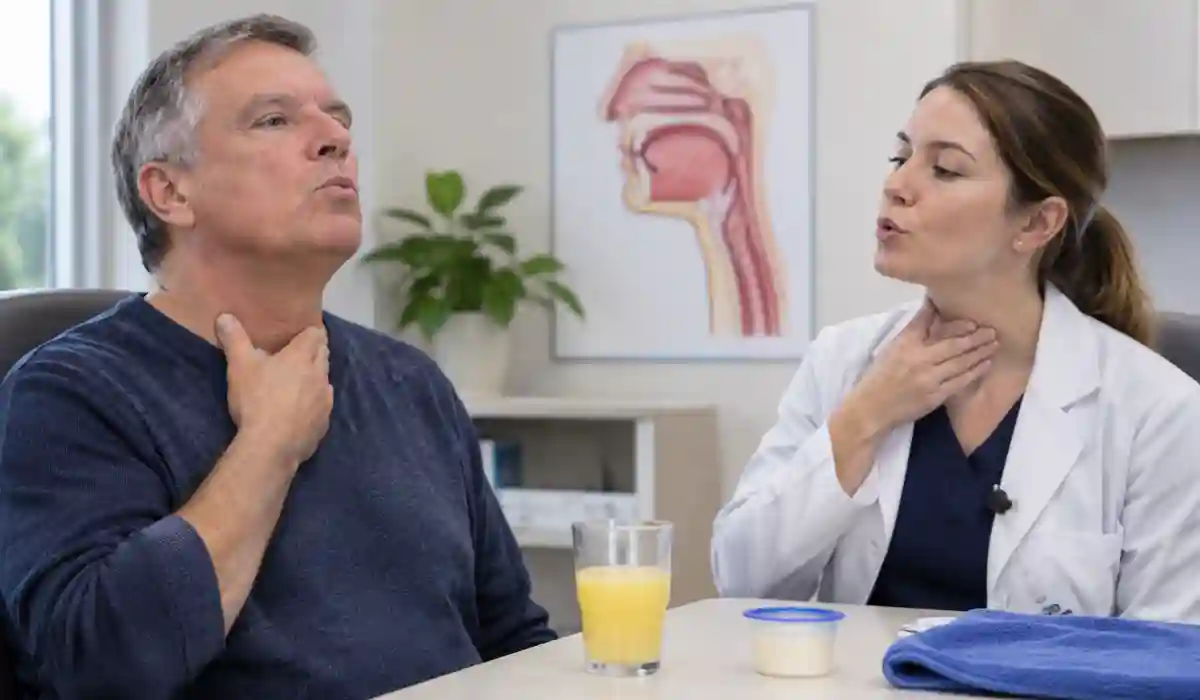
Dysphagia is a swallowing difficulty seen in children as a developmental condition and in adults as a disorder acquired later in life. The condition makes it hard and painful to move food, liquids, and even saliva from the mouth to the stomach. It can be caused by nerve or muscle problems, acid reflux, narrowing or blockage of the food pipe (esophagus), gastrointestinal problems, head or neck surgery or cancer, or medications.
Dysphagia treatment involves identifying whether the problem is in the mouth or throat (oropharyngeal), or the esophagus (esophageal), and its severity, while making eating and drinking safer by improving swallowing function, ensuring proper nutrition and hydration, and preventing airway blockage and food or liquid from entering the lungs.
In this guide, you will learn about dysphagia and its types; common causes and symptoms; how dysphagia is diagnosed; and different types of dysphagia treatments based on the underlying cause.
What is Dysphagia?
Dysphagia is the medical term for difficulty swallowing. Usually, when you swallow, food or drinks move easily from your mouth, down the throat, through the esophagus, and into your stomach. This process involves many muscles and nerves working together, but when they don’t function properly, swallowing can become uncomfortable. You may cough or choke when you try to swallow food, water, or even your own spit.
Dysphagia can feel like you’ve eaten too fast and food went down your windpipe instead of your food pipe, or like you’ve cleared your throat because something felt stuck. It is a common after-effect of a stroke, and untreated dysphagia can pose the risk of food or liquid entering your airway (aspiration), leading to lung infection or pneumonia.
Types Of Dysphagia
There are three types of dysphagia:
Oral Dysphagia:
This is a mouth-related dysphagia, meaning you have trouble chewing, mixing food with saliva, controlling food or liquid in the mouth, or moving it backward to start swallowing. Oral dysphagia occurs when the jaw, tongue, teeth, cheeks, and saliva don’t work together to break food into smaller pieces.
Oropharyngeal Dysphagia:
Here, the problem involves moving the food bolus from your mouth to the esophagus. Oropharyngeal dysphagia makes it hard to start a swallow, control food or liquid in the mouth, or prevent it from entering your airway and lungs. This can make it feel like food is stuck in the throat or cause items to come out of your nose (regurgitation).
Esophageal Dysphagia:
Esophageal dysphagia causes problems with your throat or food pipe (esophagus). The esophagus squeezes food or liquid down to the stomach, and when its function is impaired, you can feel like food is stuck around your chest (lower esophagus).
Dysphagia Causes
Dysphagia stems from nervous system and brain disorders, muscle disorders, structural issues in the mouth, tongue, teeth, jaw, cheeks, or throat, infection, or inflammation.
Nervous System and Brain Disorders:
Injuries and conditions affecting your brain and nervous system, such as ALS, brain tumors, cerebral palsy, dementia, multiple sclerosis, and Parkinson’s disease.
Muscle Disorders:
Conditions that prevent the muscles in your head and neck from supporting swallowing function, such as achalasia, cricopharyngeal spasms, esophageal spasms, muscular dystrophy, myasthenia gravis, myositis, and scleroderma.
Blockages and Structural Issues:
Throat blockages or a narrow esophagus, esophageal cancer, head or neck tumor, eosinophilic esophagitis, esophageal diverticulum, GERD, and esophageal webs.
Infection and Inflammation:
Infections like strep throat can cause pain and inflammation that lead to dysphagia.
Dysphagia Symptoms
Common symptoms of dysphagia include:
- Coughing, choking, or gagging while eating and drinking
- Frequent throat clearing
- Feeling like food is stuck in the throat
- Shortness of breath while eating
- Wet or gurgly voice while swallowing or after eating
- Food remaining in the mouth even after swallowing
- Food or liquid drooling from the mouth
- Nasal regurgitation
Dysphagia Diagnosis
Dysphagia diagnosis depends on whether the disorder affects your mouth, throat, or esophagus. A speech-language pathologist (SLP) may suggest the following tests before diagnosing:
Clinical Swallowing Evaluation: A clinician observes your swallowing action while you swallow different food and liquid textures.
Barium Swallow: A liquid barium solution is mixed with food and liquid so that it can be seen on X-rays. Also called videofluoroscopy, this test shows the solution moving as you swallow, how well the tissues function, and whether there are any blocks.
Modified Barium Swallow: This test involves swallowing barium solutions of different thicknesses to evaluate your swallowing action in real-time. A dynamic swallow study can reveal changes in structures and functions.
Endoscopy: In this test, an endoscope with a camera attached to the end of a long, flexible tube is passed through your nose or mouth to observe the throat and upper sphincter of the esophagus. Doctors may use a tool to take tiny tissue samples or to remove blockages.
Fiber-Optic Endoscopic Evaluation of Swallowing (FEES): In a FEES study, an endoscope is passed through your nose and into the throat to observe how your throat functions while swallowing different types of food and liquids.
Esophageal Muscle Test (Manometry): In manometry, a small tube is inserted into the esophagus and connected to a pressure recorder to measure the strength and timing of muscle contractions of the food pipe during swallowing.
Dysphagia Treatment
Dysphagia treatment and swallowing therapy depend on the type or the underlying condition causing your swallowing difficulty. Treatments may include:
Dysphagia Exercises: A speech-language pathologist may train you in exercises to improve the strength and coordination of the muscles involved in chewing, moving your tongue, and swallowing.
Swallowing Techniques: You will learn new ways to place food in your mouth or position your head and body to help you swallow comfortably.
Lifestyle Changes: Your physician may recommend changing your diet and eating habits to include softer foods that are much easier to chew. You may be asked to alternate between solids and liquids, eat slowly, and avoid foods and drinks that are too hot or cold.
Esophageal Dilation: During this procedure, a flexible tube with a balloon attached to the end is inserted into the esophagus. The balloon is then inflated to stretch the narrowed esophagus and keep it open.
Feeding Tube: A feeding tube is inserted if you have severe dysphagia complications that cause a lack of nutrition, dehydration, and a high risk of choking. The tube delivers nutrients directly to your stomach.
Conclusion: Treatments For Dysphagia
Dysphagia treatment starts with pinpointing the exact type of the swallowing disorder and its underlying cause. Whether your swallowing difficulty stems from oral, oropharyngeal, or esophageal issues, targeted treatments like swallowing therapy, dysphagia diet, esophageal dilation, or feeding tubes can restore or manage your swallowing ability and prevent serious complications like aspiration pneumonia.
Dysphagia is largely treatable, and early intervention protects your nutrition, hydration, and overall health. However, you should seek prompt medical care if you have persistent swallowing difficulties, choking or coughing during meals, unexplained weight loss, a wet or gurgly voice after eating, food feels stuck in your throat, or swallowing stops your breathing.
If you or a loved one has difficulty swallowing food or drinks, schedule a doctor’s appointment or consult a speech-language pathologist for proper diagnosis and a personalized treatment plan.
FAQs
1. Can dysphagia be cured?
Dysphagia is curable if caused by a treatable condition, such as acid reflux, an infection, a removable blockage, or medication. However, if the condition is neurological (disorder) or chronic (cancer), treatment focuses on making swallowing safe while maintaining nutrition levels rather than curing it.
2. What is the main treatment for dysphagia?
The first step in dysphagia treatment is identifying its cause and type. For mouth- or throat-related dysphagia, treatment often begins with swallowing exercises, posture changes, and safer eating techniques.
3. Do I need to change my diet for dysphagia?
Yes, but only after a proper medical evaluation. A dysphagia diet involves softer or pureed foods, taking smaller bites and eating slowly, thorough chewing, and thickened liquids. The right food or liquid texture depends on the person’s choking and vomiting risk.
4. What treatments are used for esophageal dysphagia?
Esophageal dysphagia treatment depends on the underlying cause. Antacids are used for acid reflux; corticosteroids for eosinophilic esophagitis; dilation for a narrowed esophagus; botox or surgery for achalasia; and stents for blockages or tumors that narrow the esophagus.
5. When is a feeding tube needed for dysphagia treatment?
A feeding tube for dysphagia may be required if the person cannot eat or drink safely enough by mouth, is losing considerable weight, is becoming dehydrated, or has a high aspiration risk despite ongoing treatment. A nasogastric tube is used temporarily, while a gastrostomy tube is inserted directly into the stomach to supply nutrients if the condition is severe.